Modeling Assumptions Clash with the Real World: Transparency, Equity, and Community Challenges for Student Assignment Algorithms
This paper examines the deployment of student assignment algorithms in U.S. school districts, highlighting how modeling assumptions clash with real-world conditions, leading to equity issues. It advocates for stakeholder engagement to better align algorithmic values with practical realities, emphasizing the limitations of purely algorithmic solutions for complex socio-political problems.
Abstract
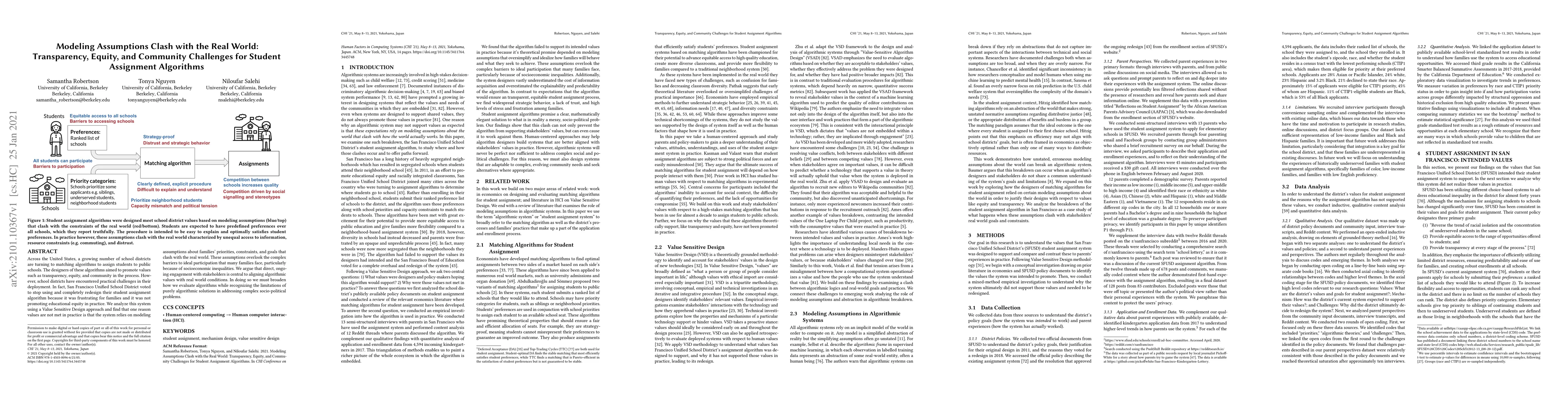
Across the United States, a growing number of school districts are turning to matching algorithms to assign students to public schools. The designers of these algorithms aimed to promote values such as transparency, equity, and community in the process. However, school districts have encountered practical challenges in their deployment. In fact, San Francisco Unified School District voted to stop using and completely redesign their student assignment algorithm because it was not promoting educational equity in practice. We analyze this system using a Value Sensitive Design approach and find that one reason values are not met in practice is that the system relies on modeling assumptions about families' priorities, constraints, and goals that clash with the real world. These assumptions overlook the complex barriers to ideal participation that many families face, particularly because of socioeconomic inequalities. We argue that direct, ongoing engagement with stakeholders is central to aligning algorithmic values with real world conditions. In doing so we must broaden how we evaluate algorithms while recognizing the limitations of purely algorithmic solutions in addressing complex socio-political problems.
AI Key Findings
Get AI-generated insights about this paper's methodology, results, significance, and more — available when analysis has been generated.
Discussion 0